RESEARCH
Cosmic Dust
Our research focuses on "cosmic dust"—tiny solid particles that fill interstellar space. These particles are sometimes mistaken for “space debris,” but they are fundamentally different: cosmic dust is a natural part of the universe, while space debris is human-made. Cosmic dust plays a vital role in the universe. It serves as the raw material for star formation and provides surfaces for chemical reactions that lead to the formation of molecules. These processes are believed to drive chemical evolution and could be closely linked to the origins of life. Therefore, understanding the types of cosmic dust, where they are found, and how abundant they are is crucial. Such knowledge extends beyond astronomy, helping us gain a deeper understanding of chemistry, physics, and the life sciences.Light Created by "Disordered Structures"
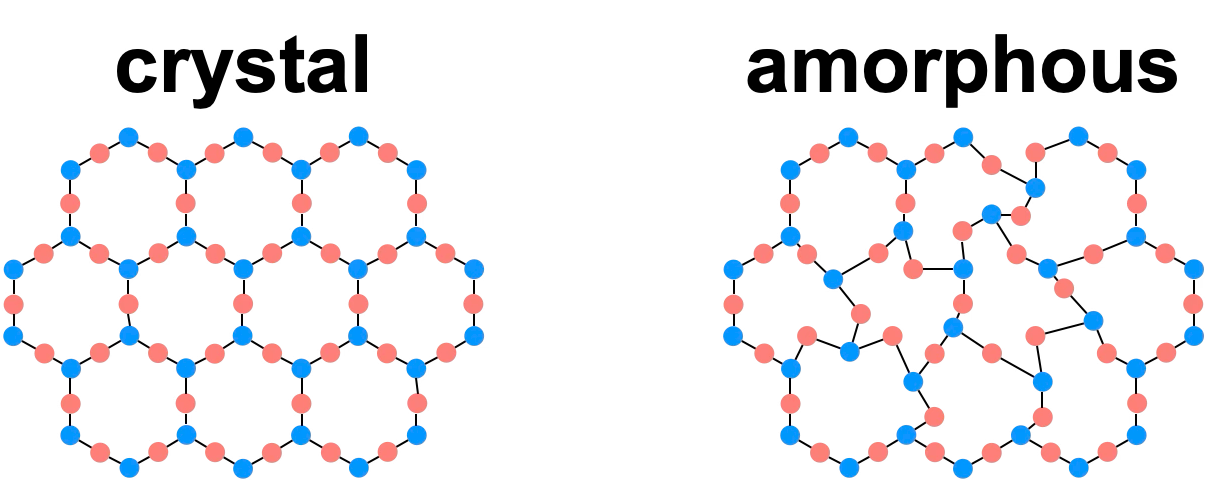
It is believed that most interstellar dust consists of amorphous structures, rather than crystals, with no ordered atomic arrangement. While this property has primarily been inferred from infrared observations, recent studies may have also shown that crystalline and amorphous interstellar dust exhibit different optical properties at radio wavelengths. In this study, we focus on characteristics common to amorphous materials and are constructing a theoretical model that links their internal structure to their interaction with light. Using such models, we aim to decipher the properties of cosmic dust from the optical information obtained through astronomical observations. Furthermore, by generating amorphous dust structures through simulations and investigating how structural differences affect optical properties, we aim to establish a link between the physical quantities derived from observations and the internal structure of the dust.
Neither Macro nor Micro
Cosmic dust is an “intermediate-sized” entity that is too small to be approximated by macroscopic physics and too complex to be rigorously calculated from first principles using microscopic physics. In this research, we focus on the properties of the “intermediate scale”—the mesoscopic scale—and are developing models to describe the behavior of cosmic dust in response to light and heat. By examining how phenomena unique to the mesoscopic scale influence observations of cosmic dust, we can not only advance our understanding of poorly understood astronomical phenomena but also potentially offer new physical and chemical interpretations of known phenomena. Using the “mesoscale physics and chemistry” hidden within these tiny particles as a clue may slightly alter our view of the universe.
Gifts from Space Falling to Earth
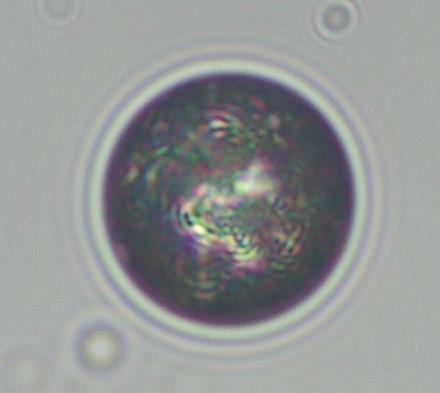
Every year, Earth receives thousands of tons of space material known as “meteorite dust,” some of which can be collected from the ground. We are analyzing these particles in the lab to understand their detailed properties. By studying particles that have traveled through space, we gain insights that astronomical observations alone cannot provide. One key aspect is the elemental composition of meteorite dust, which can deepen our understanding of the early chemical conditions of the solar system and planetary formation processes. Additionally, since these materials might contain organic molecules, our research also explores potential clues about the origins of life.
Chemistry & Universe
In the interstellar environment—which greatly differs from Earth due to its extremely low temperatures and low density—a wide variety of chemical reactions takes place. In this research, we focus on these interstellar-specific chemical processes. By understanding the properties of molecules to decode the universe and exploring new aspects of chemistry through the extreme interstellar environment, we are conducting research under the theme “Chemistry in the Universe, the Universe Through Chemistry.”
Unmasking the Nature of Molecules through Light
Light is the primary source of information about the universe. Among various forms of radiation, the origin of the characteristic emission known as the unidentified infrared band remains unclear. In this study, we focus on polycyclic aromatic hydrocarbons, a class of molecular species. By using quantum chemical calculations to accurately determine their vibrational levels and spectra, we aim to clarify their relationship with the observed light. A deep understanding of molecular properties is essential for unraveling the nature of matter in the universe.
How Are Molecules Formed in Interstellar Space?
In interstellar space, molecules form through reactions on the surfaces of cosmic dust grains. In this study, we use molecular dynamics simulations to dynamically reproduce how atoms and molecules collide and bond to form new molecules. We theoretically elucidate the “process of molecular formation,” which cannot be directly observed through astronomical observations, from the perspective of reaction dynamics.
“Creating” Cosmic Dust
Since collecting samples of cosmic dust is extremely difficult—with a few exceptions, such as meteorite dust—it is not easy to directly examine its structure. Therefore, in this study, we generate amorphous materials via simulation under conditions mimicking the interstellar environment and investigate their structures and physical properties. Through this “build-and-verify” approach, we aim to clarify what optical properties amorphous cosmic dust of various structures exhibits, and to link the information obtained from observations with the actual nature of cosmic dust.